

How to Save Water at Home - 11 Easy Tips
Did you know that only 3% of the earths water is considered fresh/drinkable? Water is sacred.
So in this post I’m going to share 11 easy tips on how to save water in our own homes in order to be more sustainable in everyday life.
Each of these points won’t cost you anything and will definitely save on your water bill.
Why Should We Save Water?
Our planet is about 71% water with about 96.5% of it in oceans. [1] This gives us the impression that there is plenty of water to go around.
However, as we just mentioned, only 3% is actually drinkable and most of this fresh water is inaccessible to us humans because it is locked up in polar ice caps or it is too far below the earths surface to for us to access.

To add to that a lot of the fresh water that is accessible to use has become polluted due to our activities on earth. This leaves only 0.4% for all of us to share! [2]
On top of that, we know that so many countries do not have clean running water and to live in a country that does have it easily accessible is a privilege.
Knowing this and knowing how much water is available, it feels disrespectful to others and to the earth to just use it frivolously, without care.
So, now that we know there isn’t really that much to go around, here are some tips on how to save water at home by being a bit more careful with it.
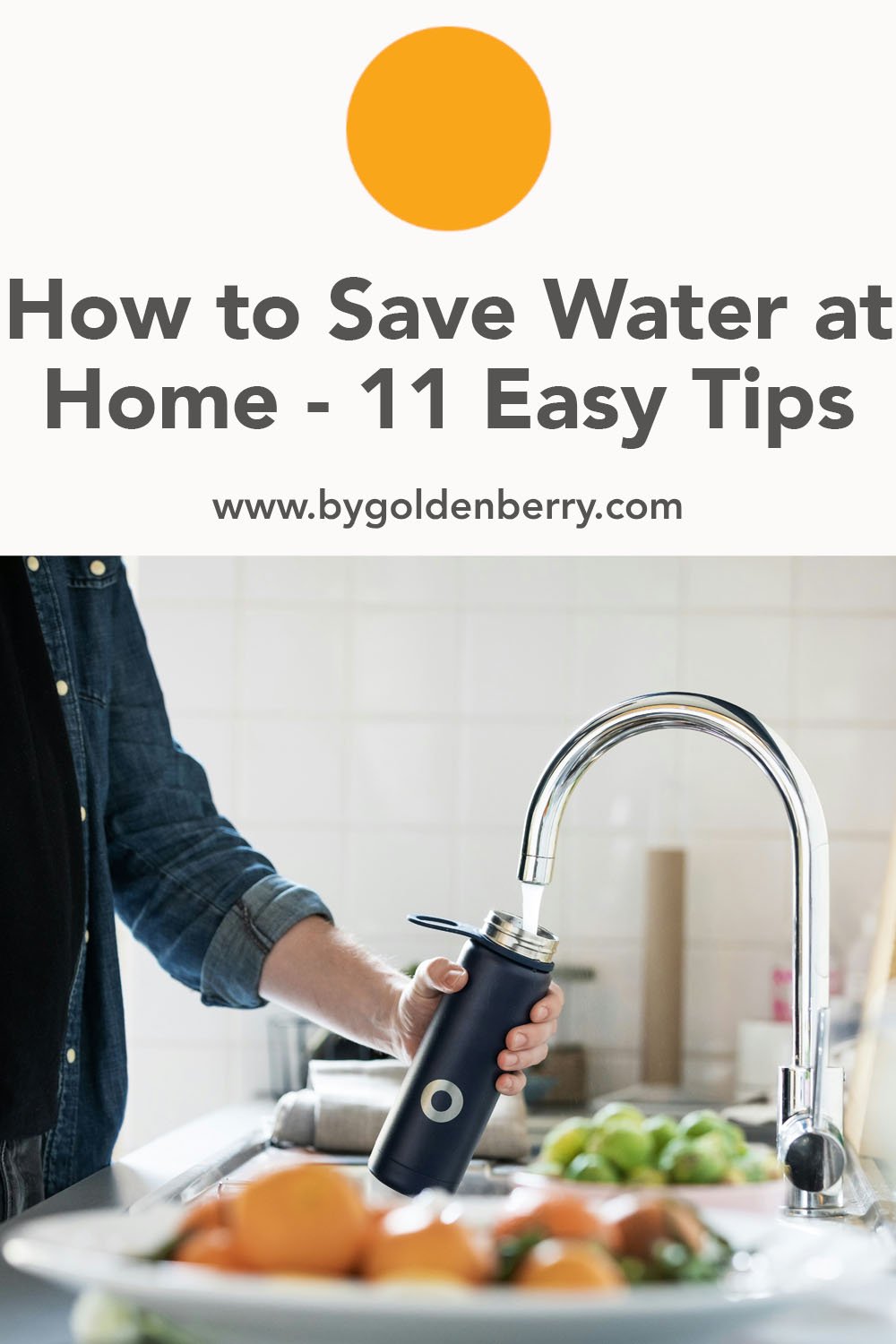
Photo by Bluewater Sweden on Unsplash
11 Easy Tips on How to Save Water
Save cold water from the shower to flush the toilet
This is an oldie but a goodie. It’s so simple!
Keep a bucket in the shower and whilst you wait for the water to run warm or hot, collect the cold water into the bucket. Use this water to flush your toilet when needed.
This was standard practice in the past but we seem to have stopped doing it due to the convenience of just pressing a button.
Saving water this way, isn’t really that inconvenient and I didn’t realise just how much we were wasting until I saw it collecting in the bucket!
When it’s yellow let it mellow, when it’s brown flush it down
Not all of these points are about the toilet, I promise :), but I hope this shows that the toilet wastes tons of water.
I’m sure the well known saying above is obvious as to what it means. If you’re uncomfortable with leaving the yellow to mellow, practice putting the lid down after use.
Remember the idea here is to flush less. So letting it mellow for a whole day isn’t necessary. Become comfortable with not flushing every time. Use the bucket to flush in between if needed, especially if you live in a warm climate. :)
Turn off the water when brushing your teeth
It seems so obvious but this is a habit so ingrained that it can be difficult to change. Make sure the tap is turned off whilst brushing and only put it on to rinse.
We only really need the water for a few seconds at the beginning and end of brushing. It doesn’t need to be running the whole time.
Don’t leave the tap running when washing dishes
Another die hard habit that I see often is leaving the tap running whilst washing up the dishes. I’m pretty sure I used to do it too in the past but I’ve now become accustomed to only turning the tap on when I need to rinse.
Another great tip is, after soaking a pan, reuse the same water to soak something else.
You can also choose to use a washing up bowl instead of running the tap. Simply fill the bowl and use only this water to wash everything.
Investing in a water-efficient dish washer is also an option. Be sure to research them before making a purchase.
Turn off the shower when washing
There’s a pattern here :) We seem to like leaving the water to run in whatever we do. This one can be difficult especially during the winter months.
However, during the summer, we can definitely try to keep our showers quick and water conserving.
Whilst you wash your hair or your body, turn the shower off. Then put it back on again to rinse. Easy! (in the summer :))
Wash a full load
Make sure you have a full load of washing before putting the washing machine on.
If you only have a few things to wash consider hand washing them in the sink instead in a smaller amount of water.
Put the washing machine on the quickest cycle
How soiled are your clothes when you put them in the washing machine? If they’re not all that soiled and just need a quick refresh consider putting them on the quickest cycle.
Collect rain water for watering plants
Does it rain often where you are? Try and get a water butt to collect rain water for watering plants.
If you don’t have one yet, put a bucket outside to collect as much as you can. You could even consider putting your indoor plants outside whilst it rains for a quick drink.
Reuse the water from storing veg in the fridge
In my post about how to make vegetables last longer to stop food waste, a few of the points involved water being stored in the fridge. We can easily reuse this water for watering plants.
When it comes to changing the water out, pour the water into a bottle that you use for watering. Leave it become room temperature again before giving it to your plants.
Reuse cooking water
Another water saving technique that I love is reusing cooking water. Not for watering plants.
Please don’t do this because, most of the time, water that we’ve used to cook pasta or potatoes contains salt or stock which plants don’t love.
Only water plants with water that has no salt or stock.
We use our cooking water for boiling other vegetables. After boiling potatoes, we pour the water into another pan and cook some greens or broccoli with it instead of pouring straight down the sink.
Consider how else you use water in your house
Where else do you use water? Can you reuse it for something else?
We often soak our bought vegetables in vinegar water for a clean. We then try to reuse this water as much as we can for descaling.
We have hard water so vinegar water can come in handy for descaling the kettle, water bottles and more.
Really think about how you use water in your house and whether you can do anything to save it or reuse it.
I would love to know your water saving techniques as every household is different. Post your ideas on how to save water in the comments so that we can learn from each other.
Sources
[1] - USGS
[2] - World Water Reserve

What is a zero waste lifestyle really like? Do we have to fit all our yearly waste into a jam jar? Find out what zero waste is like for me day to day.